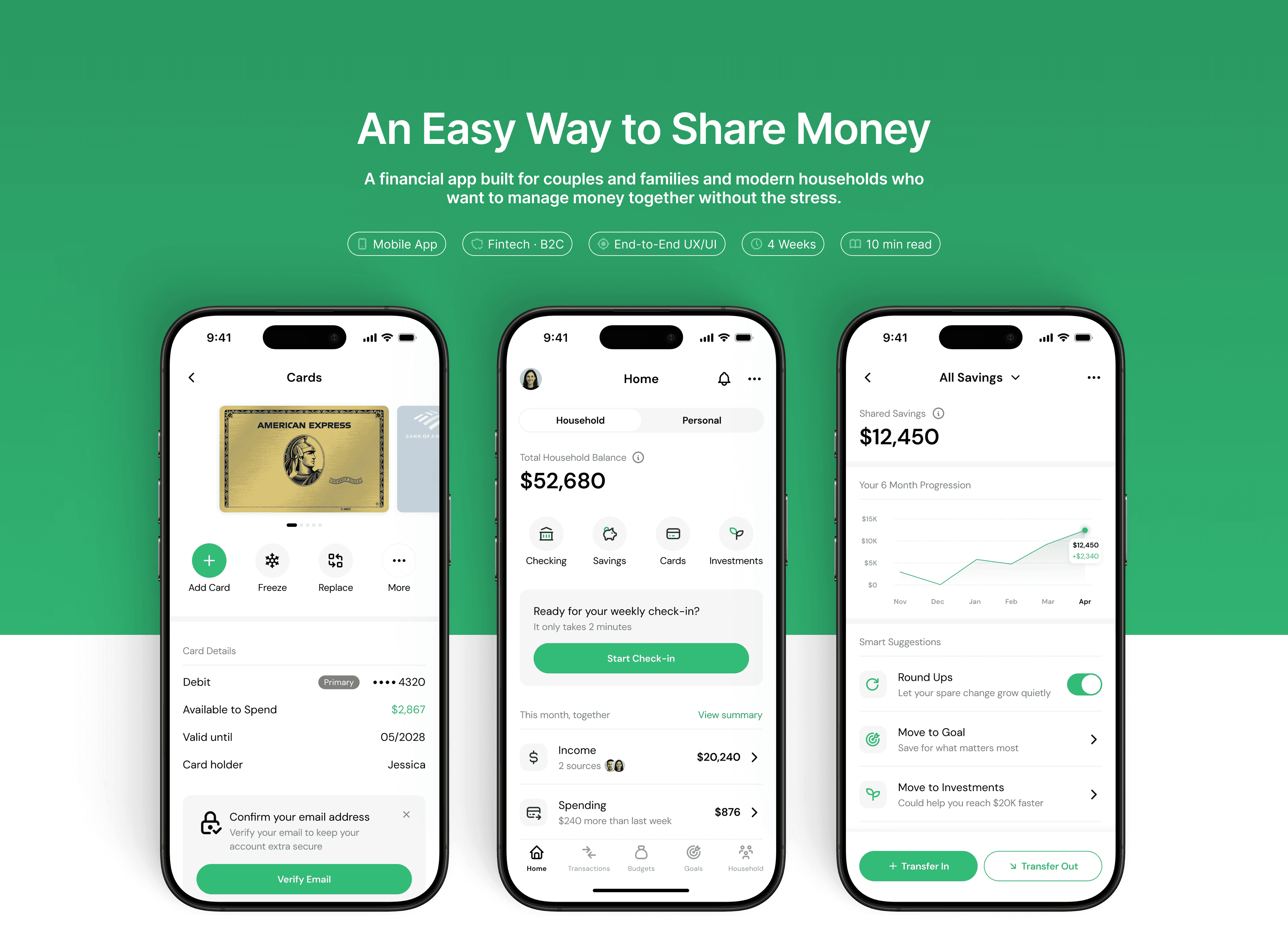
OVERVIEW
It brings everything into one place: income, spending, savings, goals, and more, so both partners can stay on the same page. The focus is on clarity, calm, and shared control, without the stress that often comes with money.
What’s the core problem Nest is solving?
Managing shared finances as a couple or family is hard. Most finance apps are built for individuals, not for two people trying to stay aligned. That often leads to stress, misunderstandings, and resentment, especially when one person ends up feeling more responsible than the other.
How I Designed Nest
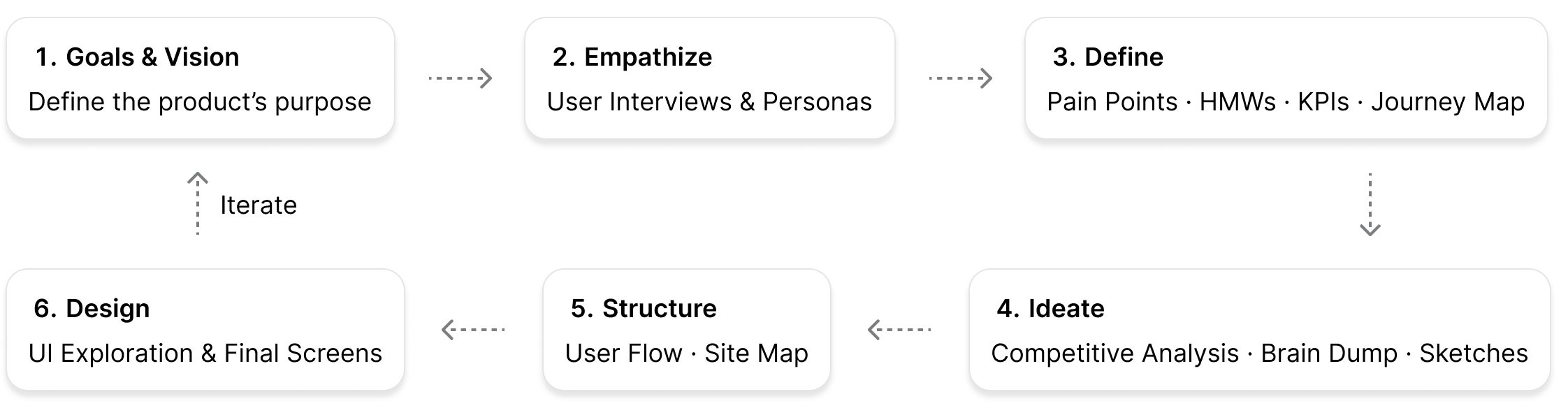
RESEARCH
Research Methods
I started by exploring how couples and families manage money together - and where it tends to fall apart. I interviewed a range of people. Alongside those conversations, I also looked at what current tools were missing.
Here’s what guided the research:
• User interviews with couples, parents, modern families and individuals managing shared finances
• Competitor analysis of apps like Mint, YNAB, Monarch, and Honeydue
• Persona and need mapping based on recurring pain points
The goal was to understand real behavior, real emotions, and what would actually make shared money feel easier.
Everyone came to Nest with a different story, but the same goal: to feel more in control, and less alone in managing money. These are the needs and frustrations we heard again and again:
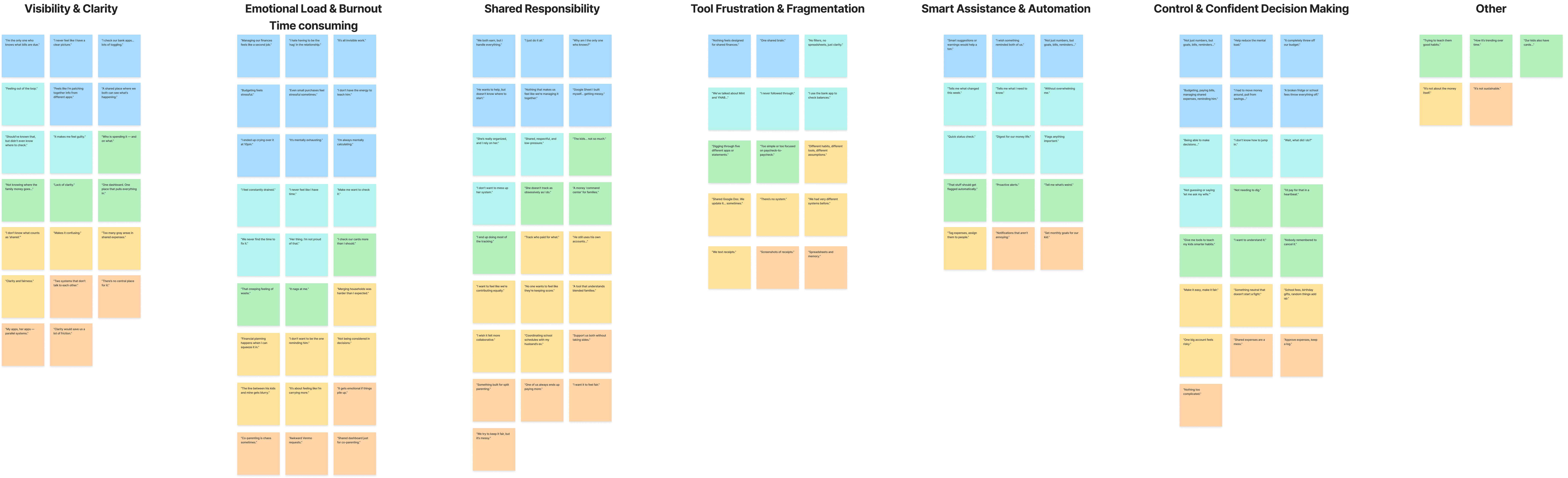
Themes from user interviews
Visibility & Clarity - Users needed a clear view of everything - shared budgets, upcoming bills, and savings in one place. This led to Nest's shared dashboard and monthly summary.
Emotional Load & Burnout - One person was often doing all the mental work. I focused on making responsibility visible and shared, with features like the Household screen and Smart Suggestions.
Shared Responsibility - Couples wanted a way to divide the load without nagging. Nest lets both partners act, track, and contribute equally.
Tool Frustration & Fragmentation - People were switching between apps, spreadsheets, and bank sites. Nest combines those into one clear system.
Smart Assistance & Automation - Users wanted the app to help, not just display numbers. I added round-ups, transfer suggestions, and progress nudges.
Confident Decision Making - People hesitated to act because they weren’t sure what they could afford. Nest shows what’s available now, what’s coming, and how it impacts goals.
These insights directly shaped the product strategy and design direction for Nest.
Goals and Design Strategy
The design decisions behind Nest came from a simple question:
What would make shared finances feel easier?
I focused on three key goals:
1. Make everything visible, for both people
2. Reduce stress through clarity and tone
3. Encourage teamwork
The People I Designed For
Everyone came to Nest with a different story, but the same goal: to feel more in control, and less alone in managing money. These are the needs and frustrations we heard again and again:
“I just want to know what’s going on.”
Some felt out of the loop and wanted visibility without having to ask.
They needed: a shared view of spending, income, and savings.
“I’m tired of being the only one who handles everything.”
Others carried the full mental load and felt alone in the process.
They needed: shared responsibility and tools that make it easy to collaborate.
“We try to save, but something always comes up.”
They had good intentions but no real system to stick with it.
They needed: visual progress, flexible transfers, and savings that adapt to life.
“I don’t want to fight about money.”
For many, money wasn’t just numbers. It was emotional.
They needed: less friction, calmer language, and a space to talk about it.
Pain points
Lack of shared visibility
Uneven responsibility
Overwhelm and stress
Confusion between tools
No clear savings or planning system
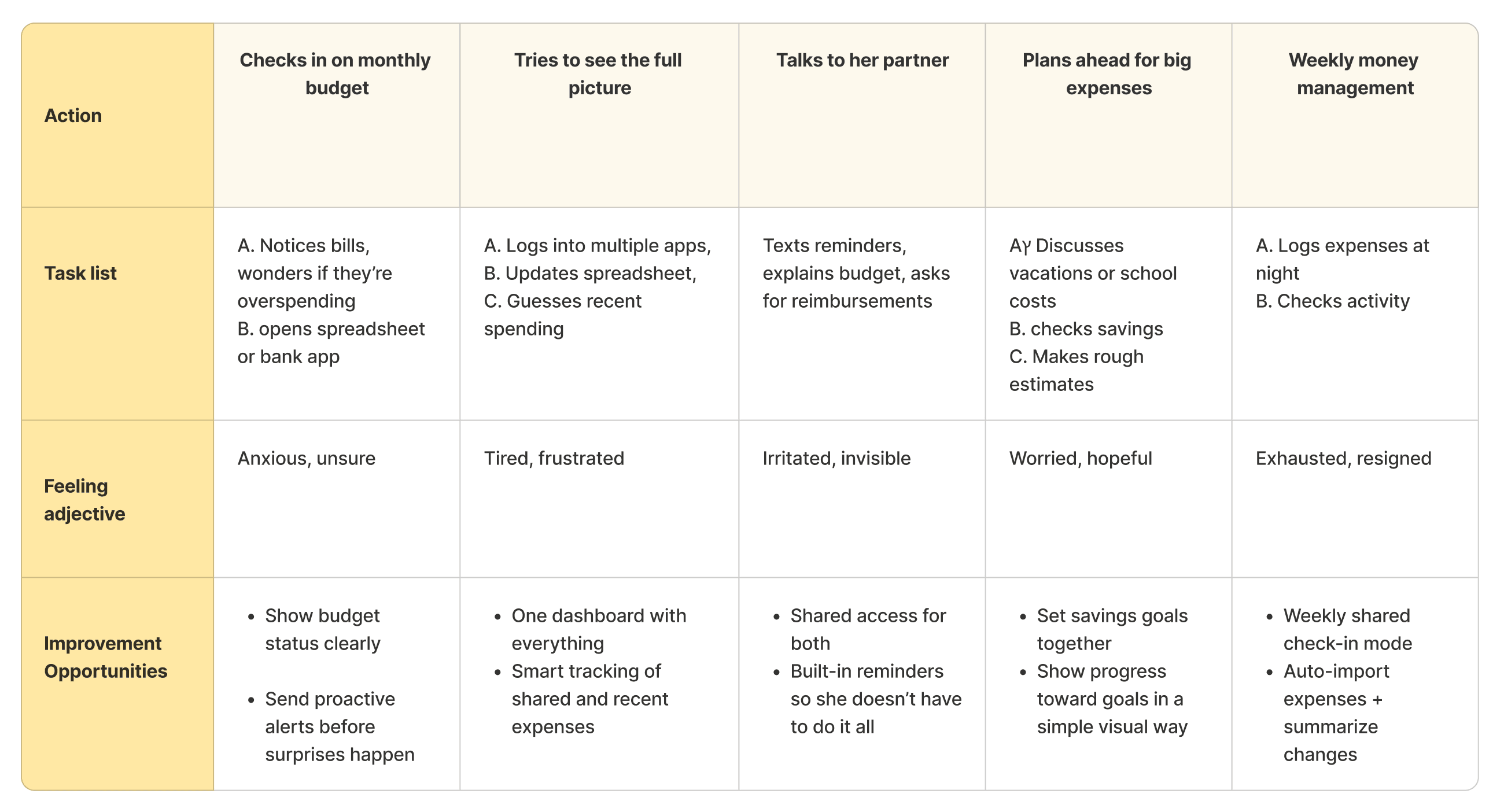
Journey Map
What a typical month looks like when one person carries the mental load
KPIs That Guided the Design
I set clear success metrics to stay focused on what really matters to users. These KPIs reflect the emotional and practical improvements Nest is designed to deliver.
✅ Increase in shared financial visibility
Both partners check the app regularly and feel informed
✅ Reduction in time spent managing finances
Less back-and-forth, fewer late-night spreadsheets
✅ More consistent savings behavior
Users set and actually contribute to shared goals
✅ Improved balance of responsibility
Financial tasks are split more evenly across the household
✅ Lower stress around money conversations
Fewer “check-in” arguments, more proactive planning
Competitive Insights
To understand where Nest could stand out, I looked at the tools couples and families are already using to manage money together. I focused on direct competitors like Honeydue, Monarch, YNAB, and Zeta - and looked closely at what they’re getting right, what they’re missing, and where Nest could do better.
I mapped the features that matter most to shared financial life: visibility, collaboration, ease, and emotional load. Nest was designed to fill the gaps that others overlook.
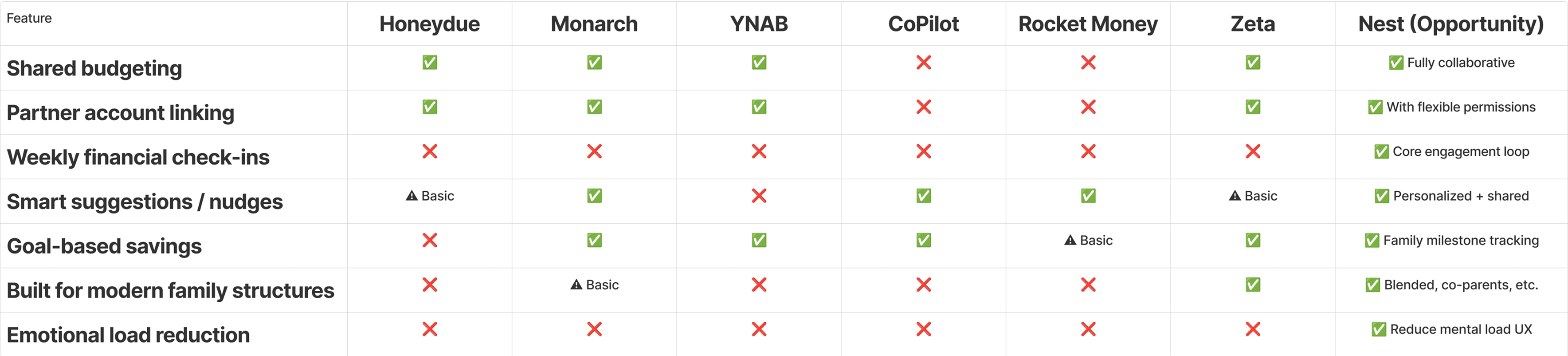
Feature comparison across top apps - and where Nest finds its edge.
Key gaps we saw across existing tools:
• Most tools don’t support blended or non-traditional families
• No one makes weekly shared check-ins part of the core experience
• The emotional load is rarely addressed or even acknowledged
DESIGN
Based on everything I now understood, here’s how I started making choices.
The research made it clear that shared finances aren’t just about money, they’re about communication, visibility, and emotional balance. I used these insights to guide every design decision, from layout to tone to functionality. The goal was to make financial planning feel calm, fair, and easy to act on, even for two very different people using the app together.
I began with quick sketches to explore structure, layout, and feature flow. This helped translate research insights into tangible ideas before committing to high-fidelity decisions.
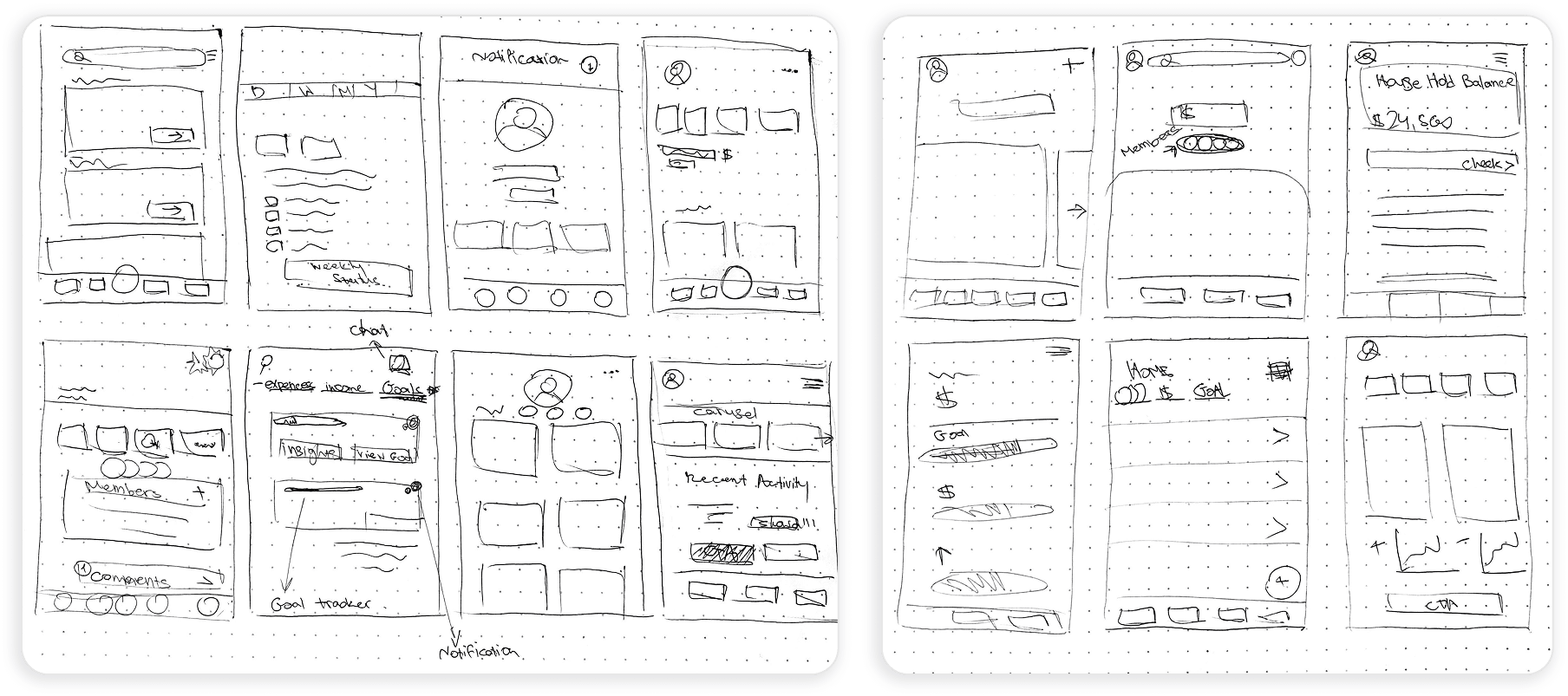
Crazy 8 sketching to quickly explore layout and flow ideas
Key Product Decisions
Separating “Savings” from “Goals” for clarity and flexibility
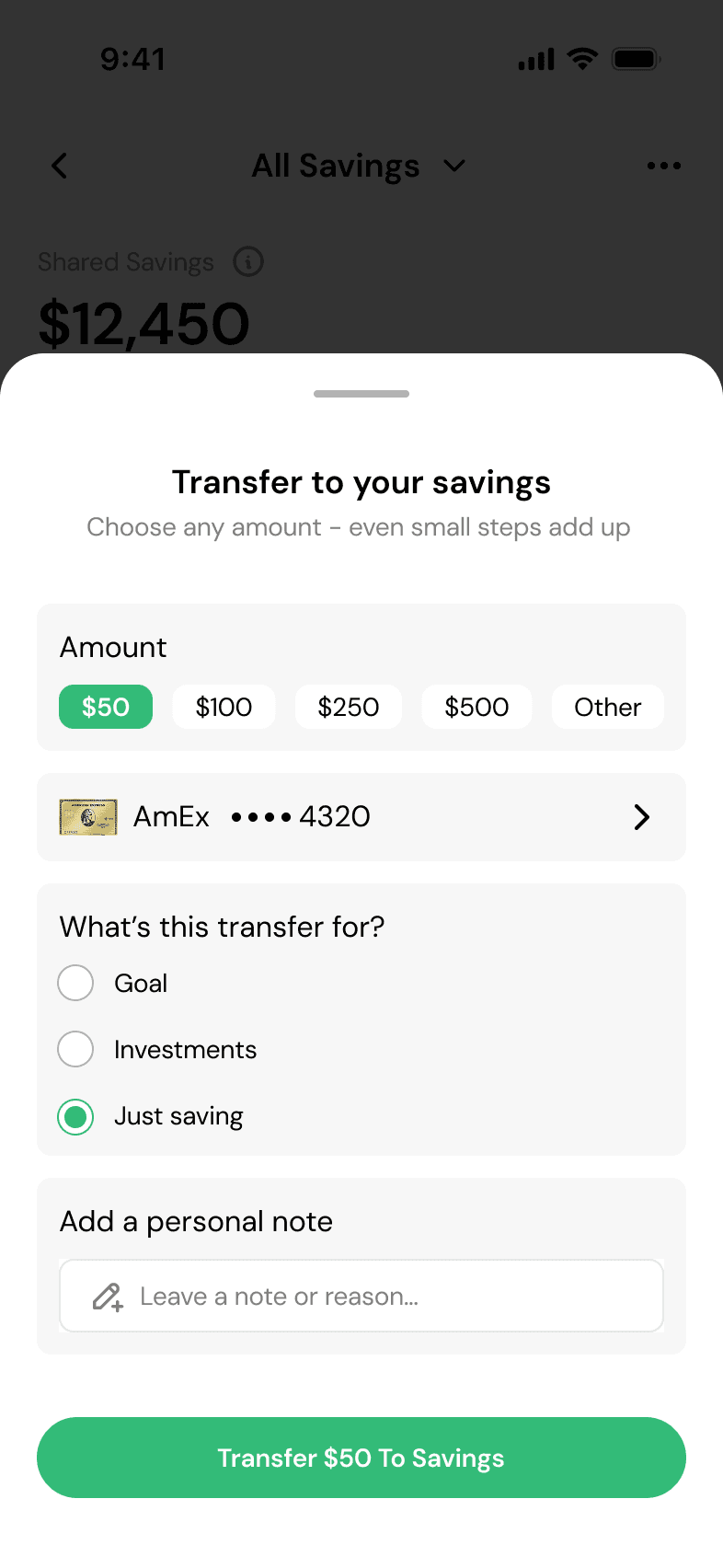
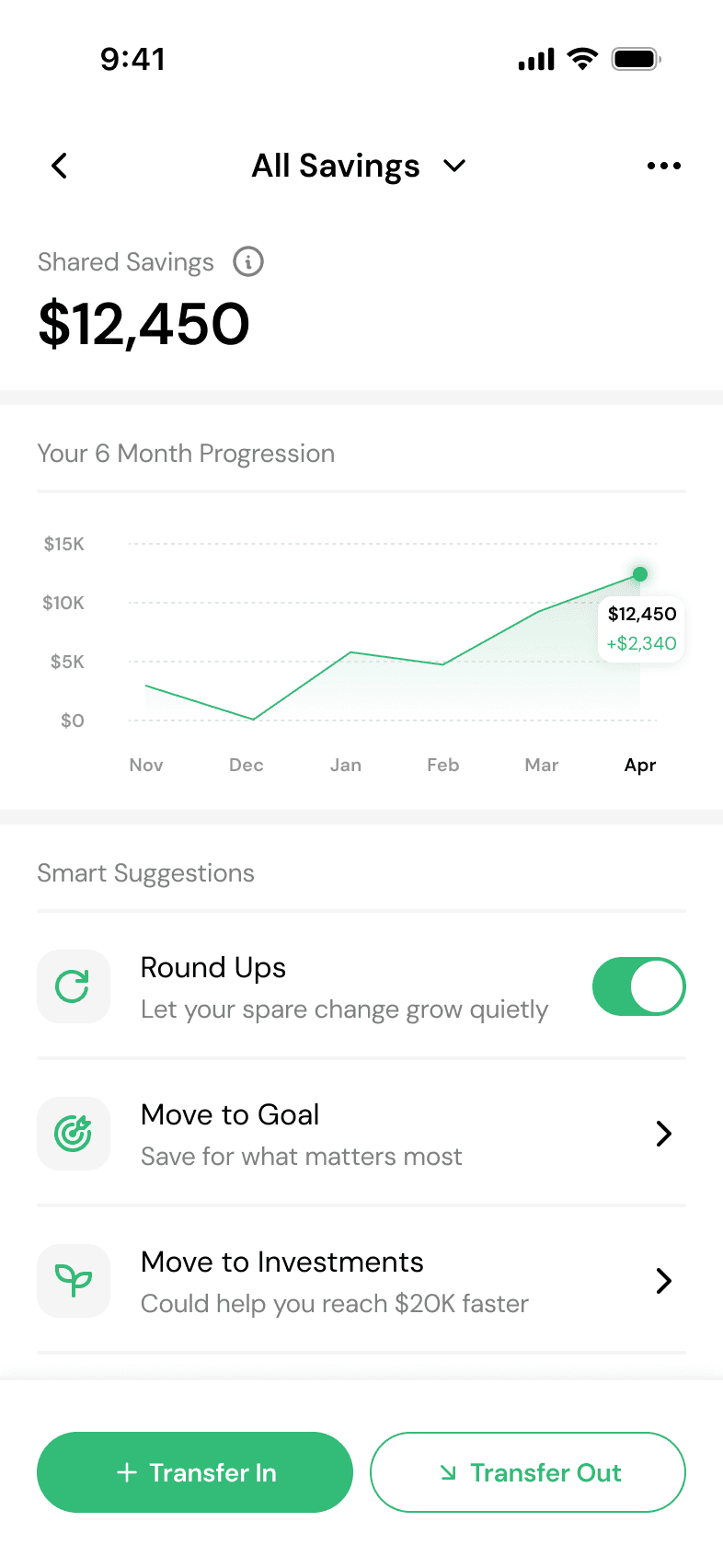
User research showed that not all saving is goal-driven. Some people just want to set money aside and decide later. I designed Savings as a flexible, habit-building space with a clear progression graph and options to move funds into Goals or Investments when ready.
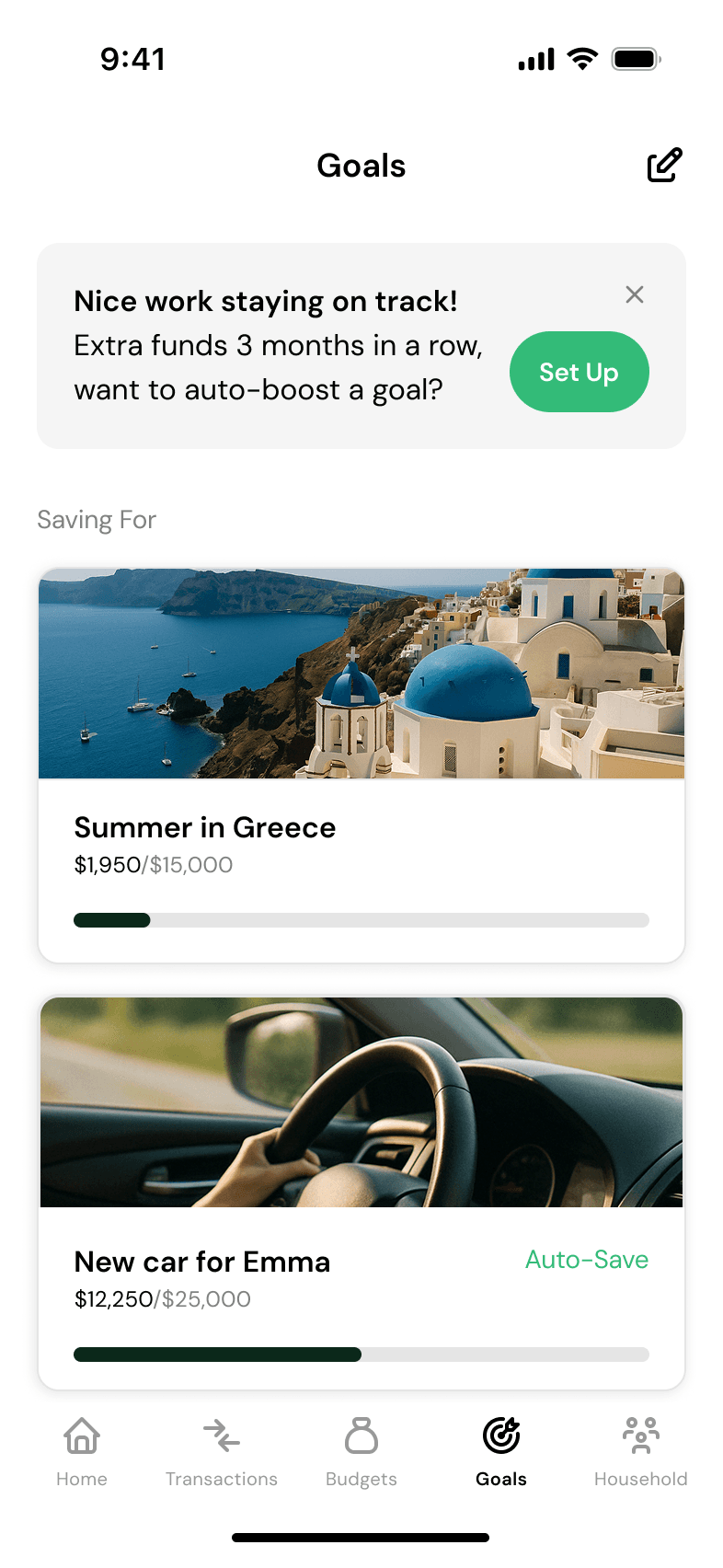
Goals are more structured and emotionally motivating. Users can set auto-transfers, track progress, and even attach images. The app suggests goal boosts when leftover funds are available, making saving feel actionable and rewarding.
This separation supports both behavioral flexibility and goal-oriented motivation, without overwhelming the user.
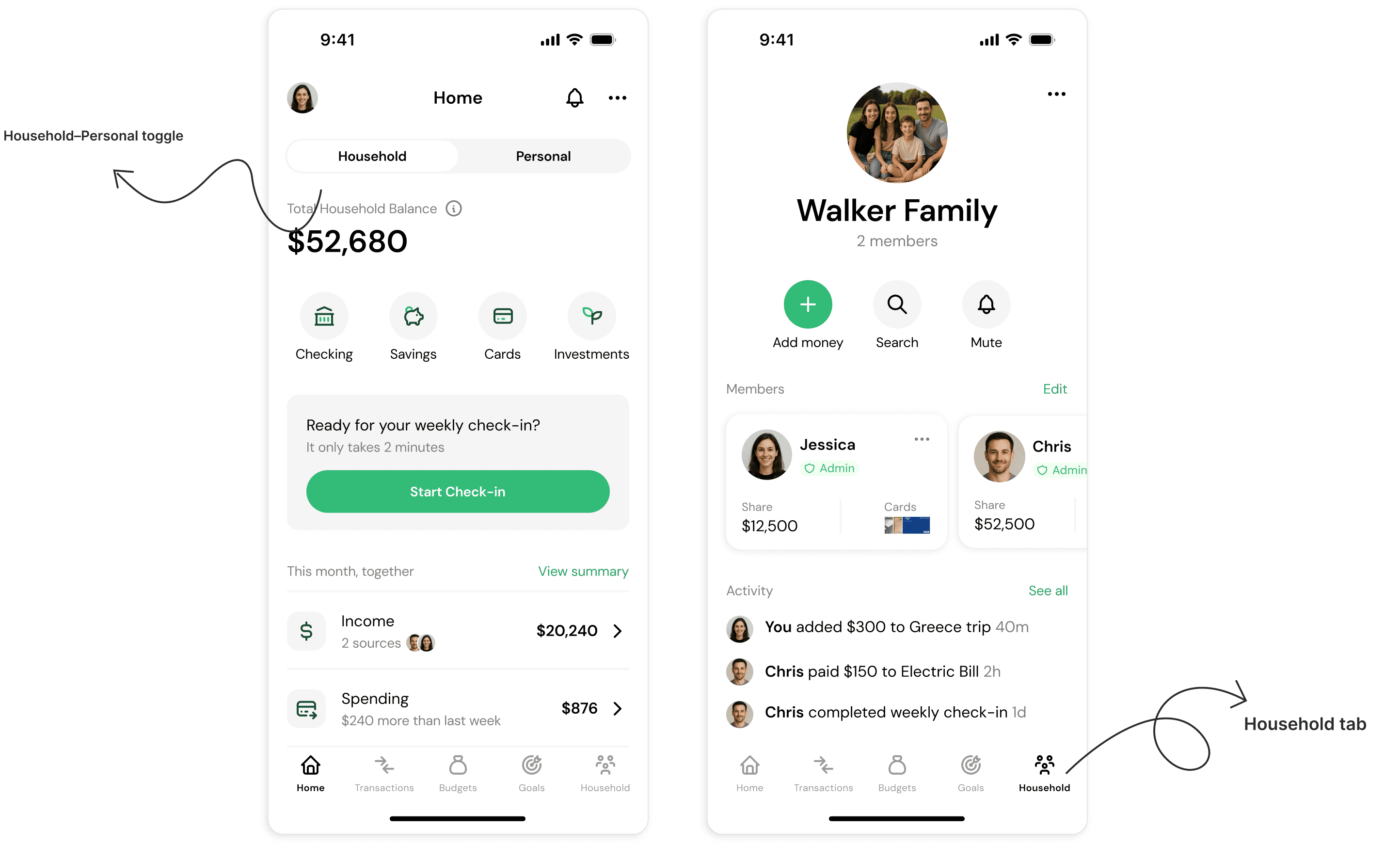
Designing for Shared Ownership and Personal Control
The Household tab creates transparency without micromanagement. Each person sees their balance, linked cards, and recent activity, so nothing gets lost or assumed. Features like “Add money” and the shared feed make it easy to coordinate and stay accountable. It’s built to reduce tension by making financial roles feel more visible, fair, and collaborative.
The Household–Personal toggle lets users switch between shared finances and their own. It reinforces the idea that money is both a collective and individual experience, without making it feel like two separate apps.
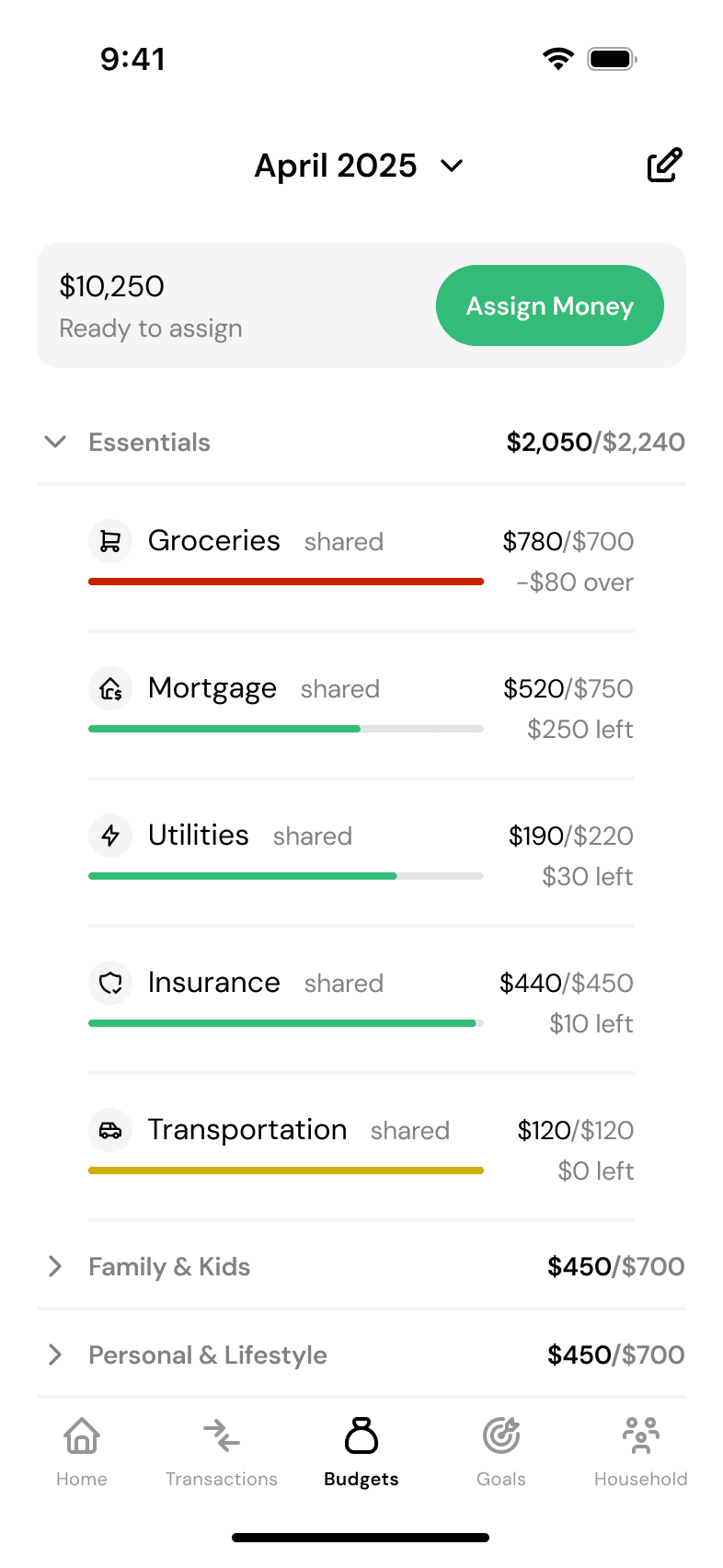
Budgets
Breaks spending into clear categories with simple visual feedback. Helps users spot issues early without blame or overwhelm.
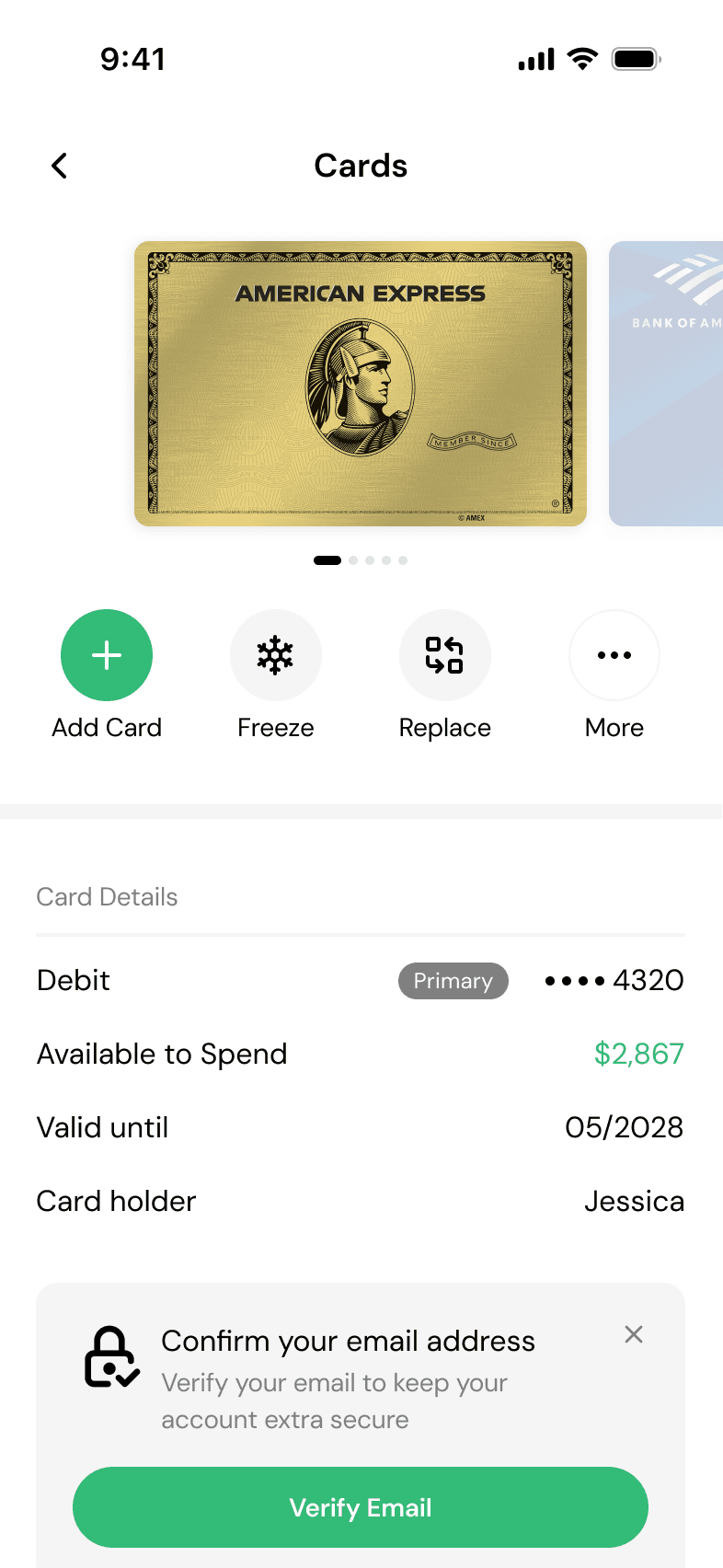
Cards
Lets users manage linked accounts, freeze cards, or review spending power - all without digging through bank apps.
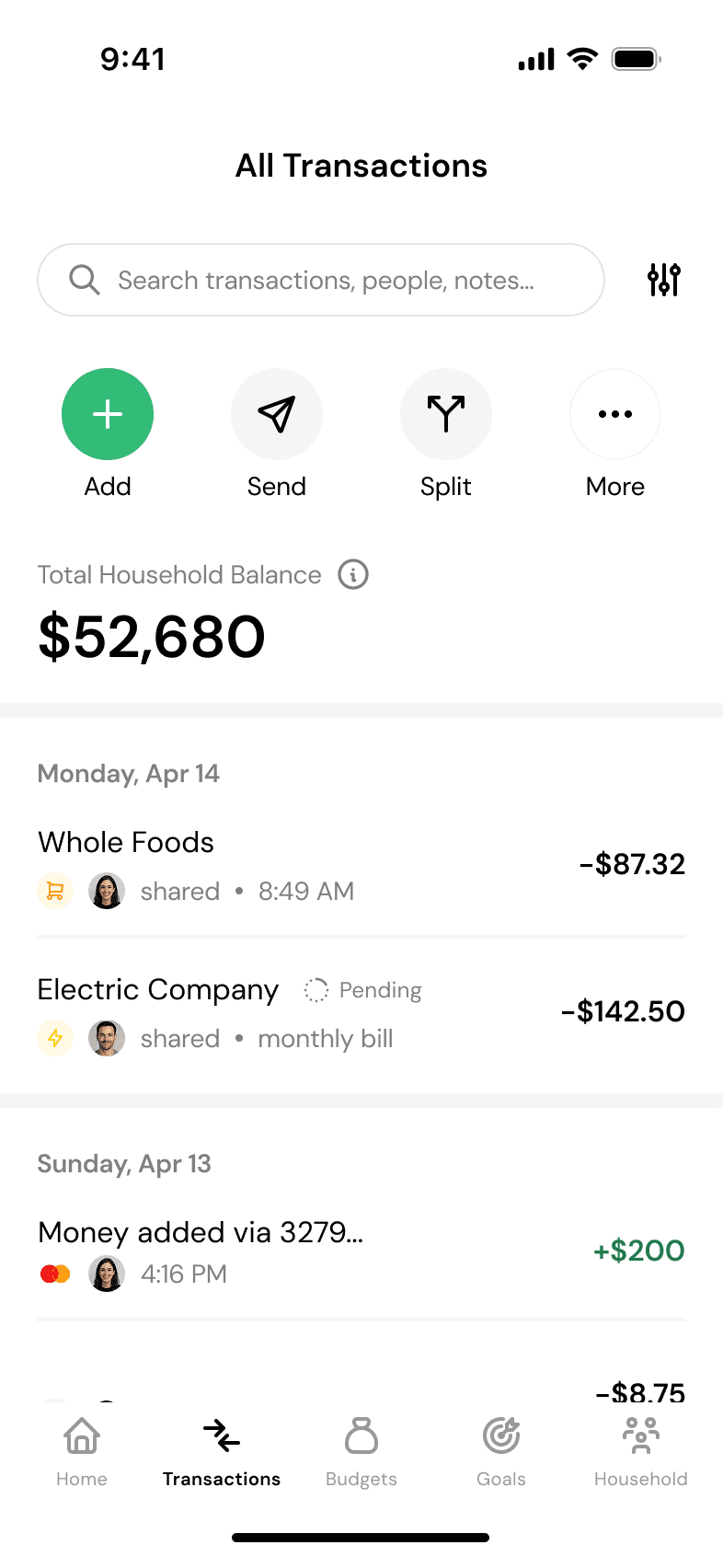
Transactions
Each payment is labeled, categorized, and tied to a person. Designed to prevent confusion.
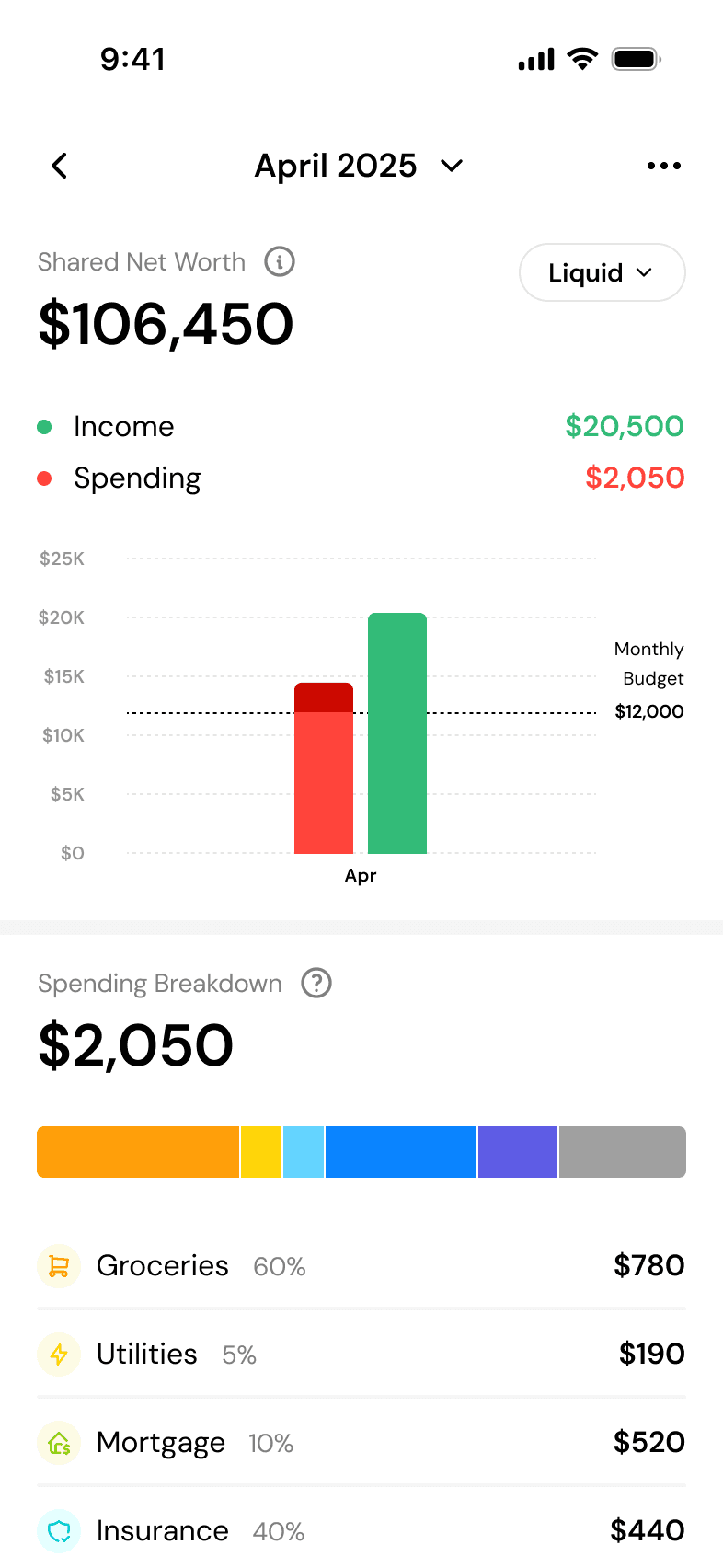
Summary
Shows net worth, income, and spending in a clear way. Visual elements like the monthly budget bar and category breakdown help users quickly understand where they stand
RESULTS & TAKEAWAYS
What I Learned
Nest helped me explore how to design for real emotional tension. The combination of clear structure, calm tone, and shared ownership created a system that supports both everyday actions and long-term habits.
What I’d Improve
If I had more time, I’d go deeper into onboarding, long-term goal insights, and how to better support families with more complex structures (like shared custody or multiple generations).
What I Took Away
This project pushed me to balance clarity with emotion, and behavior with structure. I learned how to make money feel less intimidating and more human.
Thanks for scrolling!
Want to work together? - let's talk.
Next project